


Note: This video and podcast was generated using AI, adapting the original content and technical insights created by the author of the blog post.
Artificial intelligence has undergone an extraordinary evolution. In its early stages, AI functioned primarily as an assistive tool: analyzing data, identifying patterns, and supporting human decision-making. These systems were predictable, constrained, and largely confined to well-defined tasks. Governance in this era was straightforward — monitor outcomes, ensure compliance, and track ROI. This is the domain of traditional AI governance, anchored in the PLAN–DO–ACT cycle familiar to every AI practitioner.
Yet, the landscape is changing. AI is becoming agentic — capable of autonomous action, executing decisions that have tangible operational, financial, or reputational consequences. The very nature of control and accountability shifts. Traditional KPIs and dashboards are no longer enough. Leadership must ask: Who decides what AI can do? How do we monitor actions? How do we intervene if something goes wrong?
Revisiting Traditional AI Governance
Traditional AI governance is built on the principle that AI systems assist humans rather than act independently. It emphasizes discipline, predictability, and measurable outcomes. The PLAN–DO–ACT cycle serves as the backbone:
PLAN:— Governing Investment Decisions
Planning starts with defining clear hypotheses about expected ROI. Organizations identify which business areas could benefit most and assign ownership to responsible stakeholders. Initiatives are prioritized based on value potential and readiness for adoption. Baselines for performance, data quality, and risk exposure are established. This phase also includes validating data, assessing ethical considerations, and identifying regulatory requirements. Clear planning ensures that AI is treated as an investment portfolio, rather than a collection of experiments. At this stage, AI is a set of potential, a promise of improvement, not yet an actor in the system.
DO — Governing Execution and Adoption
Pilots are run in controlled environments, humans remain in the loop, KPIs and operational metrics are tracked, adoption is actively managed, and performance is monitored. The system supports decision-making rather than making decisions itself.
Controlled pilots are executed to test hypotheses. Humans remain in the loop to interpret results, ensure correctness, and make adjustments. Operational KPIs and adoption metrics are tracked, and performance is closely monitored. This stage emphasizes learning through experimentation while maintaining accountability. Organizations may adopt iterative methodologies like agile sprints to refine AI performance progressively.
ACT — Governing Scale and Optimization
Only proven use cases scale. ROI is continuously monitored. Workflows are optimized alongside models, accountability is formalized, and high-impact opportunities are reinvested in. This stage ensures that the AI system contributes long-term, compounding value, rather than isolated gains.
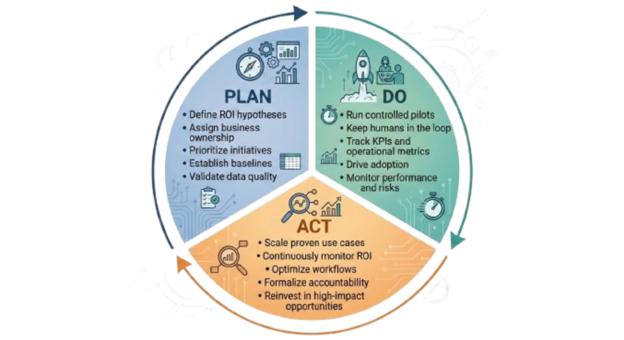
Fig. 1: Traditional AI Governance: PLAN–DO–ACT Cycle
Let’s explore an example. Imagine a retail setting:
- PLAN may involve hypothesizing that AI can improve inventory forecasting by 10%.
- DO involves running pilots in select stores, tracking forecast accuracy, and adjusting models based on human feedback.
- ACT scales the solution across the entire network of stores, continuously monitoring performance and adjusting for seasonality or market shifts.
This framework works because assistive AI does not operate independently. It is predictable, observable, and constrained. Governance ensures that these tools provide measurable value and stay within the safe bounds of organizational objectives.
Before you continue…
The reading list you'd build – if you had time.
The reads you'd find if you had time
Experts you can actually ask
Deep dives worth your weekend
Past conferences, ready when you are

The Rise of Agentic AI
Agentic AI represents the shift from support to execution. Industrial robots adjusting production in real time, AI trading systems executing transactions, or advanced chatbots committing contracts are examples of AI systems acting autonomously. This is the moment where governance must move beyond traditional ROI and compliance. Unlike assistive AI, which supports human decisions, agentic AI acts autonomously, executing operations that can have direct financial, operational, or reputational consequences. Examples include:
- Industrial robots autonomously adjusting production based on real-time demand.
- AI-driven trading platforms executing millions of transactions.
- Advanced customer-service bots committing contractual agreements.
But this autonomy introduces delegated authority: the AI itself becomes an actor. Organizations must define boundaries, monitor actions continuously, and maintain the ability to intervene. Without these safeguards, the system’s autonomy can translate into operational, financial, and reputational risk. Delegating authority to AI without proper oversight exposes organizations to risk at unprecedented scales, where errors or misaligned actions can propagate rapidly.
Once AI moves from supporting execution to performing execution, governance must evolve. While PLAN–DO–ACT governs value creation, the Authorize–Monitor–Contain loop ensures safe autonomy. It functions as a safety net for agentic AI, balancing the freedom to act with boundaries that protect the organization (see Figure 2).
Authorize — Define Boundaries Before Autonomy
Autonomous AI systems require explicit permission. What decisions are allowed? Under which financial, operational, and reputational limits? What escalation protocols exist if something goes wrong? Without this clarity, AI becomes a latent risk waiting to materialize.
Monitor — Supervise Decisions, Not Just Outcomes
KPIs can measure performance, but agentic AI can produce unintended systemic effects. Monitoring must include decision logic, policy alignment, drift detection, and anomaly surveillance. Organizations must understand how AI arrives at decisions, not just whether outputs look correct.
Contain — Preserve Reversibility
Even with authorization and monitoring, AI systems may need intervention. Kill switches, override protocols, and segmented execution ensure that mistakes can be contained and reversed. Containment transforms governance from reactive observation to active safety management.
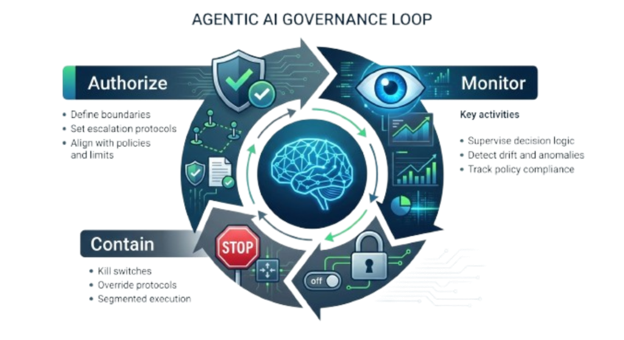
Fig 2: Agentic AI Governance Loop: Authorize–Monitor–Contain
The Authorize–Monitor–Contain loop is designed to ensure safe autonomy. While PLAN–DO–ACT manages value creation and adoption, Authorize–Monitor–Contain ensures that autonomous AI systems operate within clear boundaries, remain aligned with policies, and can be reversed or contained if they deviate. Think of it as a safety net layered over autonomy, enabling organizations to scale agentic AI responsibly.
Comparing Traditional and Agentic AI Governance
To understand the differences, let’s examine the key dimensions in the table below:
| Dimension | Traditional AI Governance | Agentic AI Governance |
|---|---|---|
| Scope | Assistive, human-supported decisions | Autonomous execution with real-world consequences |
| Governance focus | ROI, compliance, adoption | Delegated authority, systemic risk, reversibility |
| Key cycles | PLAN–DO–ACT | Authorize–Monitor–Contain (complementary to PLAN–DO–ACT) |
| Metrics | ROI, KPIs, adoption rate | Decision alignment, policy drift, override events |
| Human role | Human-led decision-making | Supervisory, intervention when needed |
| Risk exposure | Strategic and operational | Strategic, operational, financial, reputational |
The table clarifies how traditional and agentic governance differ and complement each other.
- Scope: Traditional governance is limited to assistive tools. Agentic governance manages autonomous systems performing actions with consequences.
- Governance focus: Traditional oversight emphasizes ROI, adoption, and compliance. Agentic governance focuses on delegated authority, ensuring autonomous AI acts responsibly.
- Key cycles: PLAN–DO–ACT guides structured project execution. Authorize–Monitor–Contain adds supervision over autonomous action, creating a dual-loop system.
- Metrics: Traditional metrics are outcome-oriented. Agentic AI metrics track decision behavior, policy alignment, and system interventions.
- Human role: Humans lead in traditional governance; in agentic AI, humans supervise and intervene.
- Risk exposure: Autonomous AI introduces direct operational, financial, and reputational risks, necessitating continuous oversight.
This comparison reinforces that agentic governance complements traditional governance, ensuring safety without sacrificing value.
Before you continue…
The reading list you'd build – if you had time.
The reads you'd find if you had time
Experts you can actually ask
Deep dives worth your weekend
Past conferences, ready when you are
Operationalizing Agentic AI Governance
Transitioning from assistive AI to agentic AI requires more than a conceptual understanding; it demands concrete operational frameworks. Organizations must adapt technology, processes, and culture to accommodate autonomous systems. Below is a detailed roadmap:
1. Explicit Authority Definition
The first step in operationalization is clarity about AI authority. Organizations must map each autonomous action the system can take. Questions to address include:
- Which decisions are permissible for the AI system?
- Under what operational, financial, or reputational constraints?
- What escalation protocols exist if AI takes an unexpected action?
Example: In logistics, an agentic AI may reroute deliveries in real-time to optimize fuel efficiency. Authorization boundaries might include a maximum deviation of 20% from planned routes and mandatory escalation if delivery delays exceed 2 hours. Without these clear boundaries, autonomous action could compromise customer satisfaction or regulatory compliance.
2. Advanced Monitoring Systems
Traditional monitoring of AI focuses on outputs and KPIs. Agentic AI requires real-time, multi-dimensional supervision. Key elements include:
- Decision Logic Auditing: Continuously analyze the rules and models driving autonomous decisions.
- Drift Detection: Track changes in AI behavior over time to detect deviations from expected policies.
- Policy Compliance Verification: Ensure alignment with regulatory, ethical, and corporate policies.
- Anomaly Surveillance: Identify unusual patterns that could indicate errors or malicious activity.
Example: In financial services, an AI trading platform must be monitored not only for profitability but also for compliance with risk limits and regulatory reporting obligations. Drift detection might identify a subtle shift in decision logic that increases exposure to high-volatility assets.
3. Reversibility and Containment Protocols
Even well-governed AI can behave unexpectedly. Containment mechanisms ensure errors are reversible:
- Kill Switches: Emergency stops that halt AI actions instantly.
- Override Protocols: Human supervisors can modify or cancel AI decisions mid-execution.
- Segmented Execution: Deploy autonomous AI in modular environments to prevent systemic risk.
Example: In healthcare, an AI system recommending medication dosages may operate in a contained module first. If an anomaly occurs, the override mechanism allows clinicians to intervene before any harm is done.
4. Integrated Governance Structures
Operationalizing agentic AI governance requires cross-functional collaboration:
- Business units define objectives and ROI expectations.
- Compliance and legal teams ensure adherence to regulations.
- Risk management evaluates operational, financial, and reputational exposure.
- IT and DevOps teams maintain technical safeguards for monitoring and containment.
These functions must interlock seamlessly, creating a governance fabric that allows AI autonomy while protecting the organization. Without integration, agentic AI governance becomes fragmented, reducing both safety and efficiency.
5. Ethical and Legal Oversight
Ethical and legal considerations are amplified for agentic AI. Autonomous decisions can have societal consequences. Governance must include:
- Alignment with ethical principles, such as fairness, transparency, and accountability.
- Compliance with regional laws and industry-specific regulations.
- Anticipation of reputational impacts and stakeholder perception.
Example: In content moderation, an AI system may autonomously flag or remove user content. Ethical oversight ensures that AI decisions are consistent with freedom-of-speech principles, legal requirements, and company policies.
Figure 3 illustrates how traditional governance and agentic governance integrate. The PLAN–DO–ACT cycle forms the foundational layer, ensuring ROI, adoption, and compliance. The Authorize–Monitor–Contain loop overlays this base, governing autonomous actions, risk, and reversibility. Feedback arrows indicate continuous interaction: lessons from monitoring agentic AI feed back into planning and scaling decisions, ensuring both value and safety are continuously optimized.
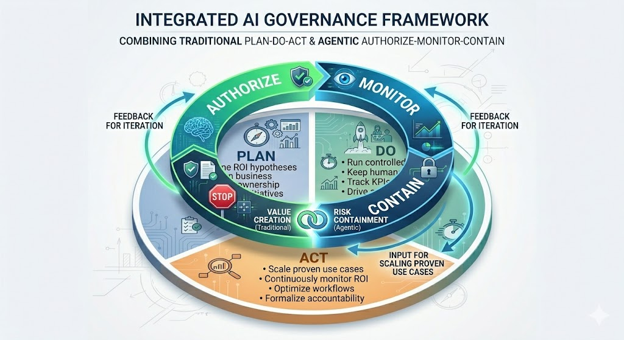
Fig. 3: Layered Governance: Integrating Traditional and Agentic AI Governance
Strategic Implications of Agentic AI Governance
Agentic AI governance is both an opportunity and a responsibility. Organizations that embrace it can capture significant value while mitigating risk. Let’s unpack this in detail:
- Scalable Autonomy: Autonomous AI systems allow organizations to delegate operational decisions safely. For example, automated resource allocation in cloud infrastructure or supply chain management can optimize efficiency, freeing human teams to focus on strategic tasks. Without agentic governance, scaling autonomy would exponentially increase operational risk.
- Compounding Value: Agentic systems, once proven safe and effective, generate exponential returns. Consider a portfolio of autonomous AI trading systems: individual systems executing reliably produce incremental gains, but together, the portfolio delivers compounding financial impact. Governance ensures these systems remain aligned with corporate objectives.
- Risk Containment and Accountability: Authority without oversight is unmanaged risk. Agentic governance formalizes accountability through authorization boundaries, monitoring, and reversibility protocols. This ensures that errors can be corrected, policies enforced, and organizational reputation preserved.
- Dual Governance Loops for Resilience: PLAN–DO–ACT guarantees value creation; Authorize–Monitor–Contain guarantees operational safety. Combined, these loops provide a resilient governance architecture capable of supporting both innovation and control. Lessons from monitoring agentic AI inform planning and scaling decisions, creating a continuous improvement feedback cycle.
- Organizational Alignment and Culture: Successful agentic governance requires buy-in across leadership, risk management, compliance, and operational teams. It fosters a culture of disciplined experimentation: autonomous AI is empowered to act, but humans remain accountable for outcomes.
In summary, agentic AI governance transforms risk into a managed, strategic asset, enabling organizations to scale safely, innovate responsibly, and maximize ROI.
Before you continue…
The reading list you'd build – if you had time.
The reads you'd find if you had time
Experts you can actually ask
Deep dives worth your weekend
Past conferences, ready when you are
Conclusion: Governance for the Next Era
The evolution from assistive to agentic AI is more than a technological shift — it is a governance revolution. Traditional frameworks govern value; agentic governance governs authority. Together, they ensure AI systems are productive, safe, accountable, and aligned with organizational goals.
Leadership must answer: Who decides what AI can do? How is autonomous action monitored? How is intervention ensured? The Authorize–Monitor–Contain loop provides the framework.
Organizations mastering both paradigms will scale AI responsibly, unlocking compounding value while safeguarding operations, reputation, and trust.
Author
🔍 Frequently Asked Questions (FAQ)
1. What is agentic AI governance?
Agentic AI governance is the governance of AI systems that can autonomously execute decisions with operational, financial, or reputational consequences. It focuses on delegated authority, continuous oversight, policy alignment, and the ability to intervene when autonomous systems deviate from expected behavior.
2. How does agentic AI governance differ from traditional AI governance?
Traditional AI governance primarily covers assistive systems in which humans remain responsible for making decisions. Agentic AI governance addresses autonomous execution and therefore adds controls around delegated authority, systemic risk, decision monitoring, and reversibility.
3. What is the Authorize–Monitor–Contain governance loop?
Authorize–Monitor–Contain is a governance loop designed to manage autonomous AI safely. Authorize defines what the AI may do, Monitor supervises its decisions and behavior, and Contain ensures that problematic actions can be stopped, overridden, or isolated.
4. What does authorization mean in agentic AI governance?
Authorization means defining explicit boundaries before an AI system receives autonomy. Organizations should specify which decisions the system may make, the operational or financial limits it must respect, and the escalation procedures required when those limits are reached.
5. What role do humans play in agentic AI governance?
Humans move from directly making every decision to supervising autonomous systems and intervening when necessary. Although AI may receive authority to act, human stakeholders remain responsible for defining boundaries, maintaining oversight, and ensuring organizational accountability.